

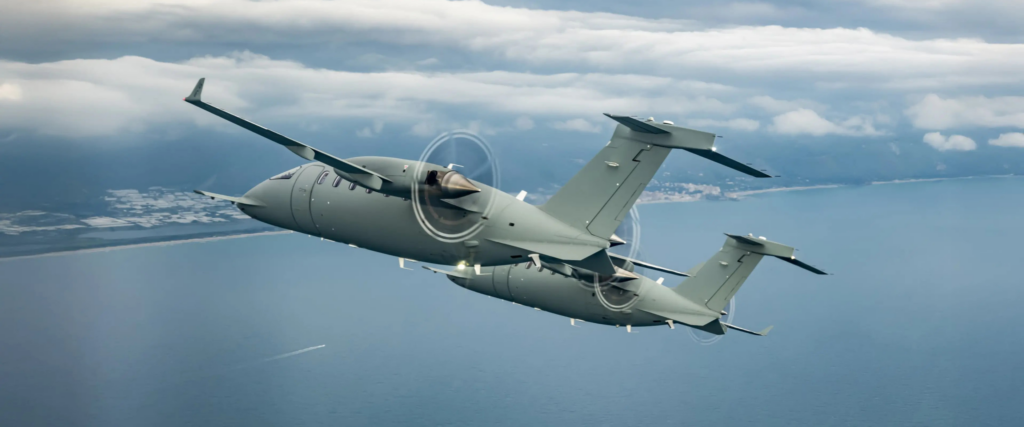
The Piaggio P.180 Avanti has always occupied a strange and singular place in business aviation. It is unmistakably odd-looking — pusher propellers, a canard up front, a fuselage shaped like nothing else flying — and genuinely exceptional in the ways that matter. It is one of the fastest turboprops ever built, returns fuel burn numbers that embarrass many light jets, and delivers a pressurized cabin that rivals aircraft costing considerably more.
For years, it was also an aircraft in an uncertain position. Piaggio Aero, the Italian manufacturer behind it, spent much of the last decade cycling through financial difficulty and ownership changes, producing only four to five aircraft per year. The Avanti was compelling enough to survive. The company, barely.
That changed in 2025. Baykar, the Turkish aerospace company known primarily for its Bayraktar drone systems, acquired Piaggio and has since outlined an ambitious plan to revive the brand and finally give the Avanti the backing it’s always needed.
Here’s what happened, what’s planned, and what it means if you own or are considering an Avanti.
How Baykar Ended Up With Piaggio
Baykar signed the preliminary acquisition contract in January 2025. The deal finalized on June 30, 2025, transferring Piaggio Aero Industries and Piaggio Aviation to a new entity — Baykar Piaggio Aerospace S.p.A. — headquartered in Italy.
Baykar is not a legacy aviation conglomerate. It’s a defense and aerospace company that built the Bayraktar TB2 unmanned combat aerial vehicle, which gained significant international attention for its battlefield performance in multiple conflicts. The company has deep engineering capability and, critically, the financial resources to invest in an asset that Piaggio’s prior owners could not properly capitalize.
The strategic logic is straightforward. Baykar gains a certified European manufacturing facility, an established civil aviation brand, and a platform for expanding into crewed aviation. Piaggio gains a well-funded owner with serious aerospace credentials and a stated commitment to growing the Avanti program.
The Production Gap: From 5 to 30 Aircraft Per Year
One of the clearest signals of what Baykar intends to do with Piaggio is its stated production target.
Piaggio was building approximately four to five Avanti EVO aircraft per year at the time of the acquisition — a figure that reflects years of underinvestment, limited sales resources, and constrained manufacturing capacity. For context, that level of production made it difficult for Piaggio to compete effectively, support a dealer network, or maintain the kind of market presence that attracts buyers who need confidence in a manufacturer’s long-term viability.
Baykar’s stated goal is to raise annual Avanti output to 25 to 30 aircraft.
That’s a six-fold increase. If achieved, it represents a fundamentally different company — one with the manufacturing scale to drive costs down, support operators more robustly, and compete in the turboprop and light jet segments in a meaningful way.
Whether that ramp is achievable on the stated timeline remains to be seen. But the intent, and the capital behind it, is real.
The Avanti NX: What’s Coming and When
Baykar has announced a modernization program for the P.180 under the Piaggio Avanti NX banner. The first official sales contract for the Avanti NX was signed at the AERO Friedrichshafen 2026 air show — a signal that the program is progressing from planning to commercial reality.
The areas of focus for the NX update are avionics, interior, and entertainment systems. The avionics upgrade has been identified as the top priority and the primary pacing item for the program. The current Avanti EVO’s cockpit, while capable, reflects an older generation of systems. A modern avionics suite — with current-generation displays, navigation, and connectivity — would substantially improve the aircraft’s appeal to buyers who compare it against newer turboprops and light jets.
Interior and entertainment updates will follow, addressing the cabin experience in ways that bring it in line with what buyers expect from the broader market.
The NX is estimated to arrive in approximately three to four years — placing deliveries roughly in the 2028 to 2029 timeframe. Baykar Piaggio is clearly in a build phase: the manufacturing expansion, the NX development, and the commercial outreach are all running in parallel.
What This Means for Current Avanti Owners
If you own an Avanti EVO, the Baykar acquisition is broadly positive news.
The most significant concern for any owner of a low-production aircraft is manufacturer support — parts availability, service network quality, and confidence that the platform will continue to be developed. Piaggio’s pre-acquisition trajectory raised legitimate questions about all three. A well-capitalized new owner with stated production ambitions and an active modernization program addresses those concerns directly.
In practical terms, owners should expect improved parts support and service infrastructure as the production ramp takes hold. Whether the NX avionics suite will be retrofittable to existing Avanti EVOs — and at what cost — is a question worth tracking as the program develops.
From a resale standpoint, a manufacturer revival tends to be net positive for pre-owned values of the same type. Buyers who were previously hesitant about long-term support now have more reason to look at the platform. A more competitive Avanti in the new aircraft market pulls the pre-owned segment with it.
What It Means for Prospective Buyers
If you’ve considered an Avanti but held off because of uncertainty about Piaggio’s future, the situation has materially changed. The acquisition resolves the manufacturer risk question that was legitimately keeping some buyers on the sidelines.
The decision between a current-generation Avanti EVO and waiting for the NX comes down to timeline and priorities. Buyers who need an aircraft now and value the Avanti’s unique performance envelope — its speed, fuel efficiency, and cabin volume relative to its operating cost — have more reason to act. Buyers with flexible timing who want the modernized avionics and interior of the NX have a clearer target to wait for.
Either way, the Piaggio program is in a more credible position than it’s been in years.
Interested in the Avanti EVO or tracking the Avanti NX? Holstein Aviation monitors the pre-owned turboprop and light jet market across all major platforms. Contact us to talk through whether the Avanti fits your mission.