

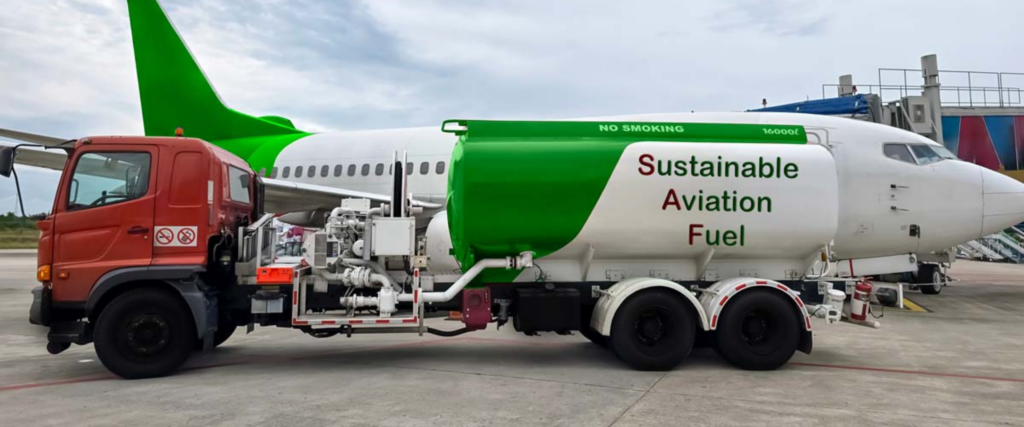
Sustainable aviation fuel has moved from a niche talking point to a mainstream conversation — private jet sustainability is now a real consideration for buyers, operators, and corporate flight departments alike. If you’re buying, operating, or planning to sell an aircraft in the next several years, it’s worth understanding what SAF actually is, where it stands today, and what practical implications it carries for aircraft owners.
This isn’t a story about altruism. It’s a story about where the industry is heading and what that means for the decisions you make today.
What SAF Actually Is
Sustainable aviation fuel is a drop-in replacement for conventional jet-A fuel, produced from non-petroleum feedstocks — things like agricultural waste, municipal solid waste, used cooking oils, and in some formulations, synthetic processes that capture carbon directly from the atmosphere. The term “sustainable” refers to the lifecycle carbon footprint of the fuel relative to conventional jet fuel.
SAF is not a new engine technology. It doesn’t require modifications to existing aircraft, engines, or fuel systems. Most turbine engines currently in service can operate on blends of SAF and conventional jet-A up to a 50/50 ratio — and full 100% SAF approval is progressing through certification processes for many platforms. The fuel burns the same way, performs the same way, and from a pilot’s perspective, operates identically to conventional jet-A.
The key difference is upstream: where the carbon came from and how much net carbon enters the atmosphere over the fuel’s full lifecycle. Depending on the feedstock and production method, SAF can reduce lifecycle carbon emissions by 50% to 85% compared to conventional jet fuel.
Where SAF Availability Stands Today
This is where expectation and reality diverge somewhat. SAF is available, but not everywhere, not always, and not yet at a price that reflects cost parity with conventional jet-A.
At major commercial aviation hubs and a growing number of FBOs at business aviation centers, SAF is becoming increasingly accessible. Operators who want to use it can find it, particularly if they’re based near larger airports in major metro areas or near production facilities in Europe. At smaller regional airports and rural FBOs, it may not be available at all.
On pricing, SAF currently carries a meaningful premium over conventional jet-A — typically anywhere from 2x to 4x the cost per gallon, depending on feedstock and sourcing. For high-utilization operators running significant annual fuel burn, that premium is a real budget consideration. For owner-operators flying 200–400 hours per year, the additional cost is manageable and, for those motivated by sustainability, often worth it.
Availability and pricing are both improving. Government mandates in the European Union, the U.K., and the United States are driving SAF production targets higher, and investment in production capacity is accelerating. The trajectory is toward broader availability and declining premiums — but that’s a 5–10 year story, not a 12-month one.
The Regulatory Direction
The regulatory environment around SAF is moving in one direction: toward more of it.
The European Union’s ReFuelEU Aviation regulation mandates that SAF comprise a growing percentage of aviation fuel at EU airports — starting at 2% in 2025, rising to 6% by 2030, and scaling significantly in subsequent decades. The U.K. has similar mandates under development. The United States, through the Inflation Reduction Act and FAA policy, has created significant financial incentives for SAF production and is establishing its own blending targets.
For aircraft owners who operate internationally — particularly those flying to or within Europe — the practical effect is that SAF exposure will increase whether operators seek it out or not. Understanding the regulatory landscape is relevant for operators planning international operations or flight departments managing compliance for corporate flight departments.
What This Means for Aircraft Buyers
For buyers evaluating acquisitions today, SAF has several practical implications worth keeping in mind.
Aircraft compatibility is essentially universal for current-generation turbines. If you’re buying a modern turboprop or jet, your aircraft is almost certainly SAF-compatible at current approved blend ratios. This is not a differentiating factor in most purchasing decisions today, but verifying engine and airframe manufacturer SAF approval documentation is a reasonable diligence step.
Corporate flight departments face growing pressure. Buyers acquiring aircraft for corporate flight departments should expect sustainability reporting requirements and SAF usage questions from their stakeholders to increase over the next several years. ESG commitments at the corporate level increasingly touch the flight department. Buyers in this segment would benefit from having a SAF strategy — even if the strategy is simply to use SAF when it’s available at their primary FBO.
Resale value implications are still forming. There isn’t yet a clearly established premium for aircraft operated on SAF or a discount for those that weren’t. What is emerging is that operators and buyers who can document sustainable operations are finding those records matter increasingly in corporate contexts. This is likely to become more significant over time, not less.
The technology curve is real. Fully electric and hydrogen-powered regional aviation platforms are in development, but they are not near-term competitive threats to the turboprop and business jet categories that most private buyers operate in. SAF is the practical, near-term solution for reducing the carbon footprint of existing aircraft — and for the vast majority of owners, it’s the only carbon reduction lever currently available.
The Bottom Line for Buyers
SAF isn’t a reason to delay a purchase or change which aircraft you’re considering. It is a reason to understand the direction the industry is moving and to build an operational framework that can adapt as fuel availability expands and regulatory requirements evolve. Buyers who develop relationships with FBOs that prioritize SAF sourcing, track their fuel usage and blending ratios, and stay current on manufacturer approvals will be better positioned for the environment that’s coming — even if that environment is still a few years from full arrival.
Private aviation’s sustainability story is still being written. But the direction is clear, and buyers who pay attention now won’t be caught off guard when the requirements become more concrete.
Want to discuss how SAF and sustainability considerations fit into your aircraft ownership plans? Holstein Aviation works with buyers and owners at every stage of the process. Contact us to start the conversation.