

For anyone in the market for a business aircraft, the cockpit is arguably one of the most important feature to evaluate. Today’s integrated flight decks are a testament to the rapid advancements in aerospace technology, moving far beyond the “glass cockpit” of a decade ago. The new standard in a used business jet offers enhanced safety, reduced pilot workload, and unprecedented situational awareness. Understanding these next-generation systems is crucial for any potential buyer.
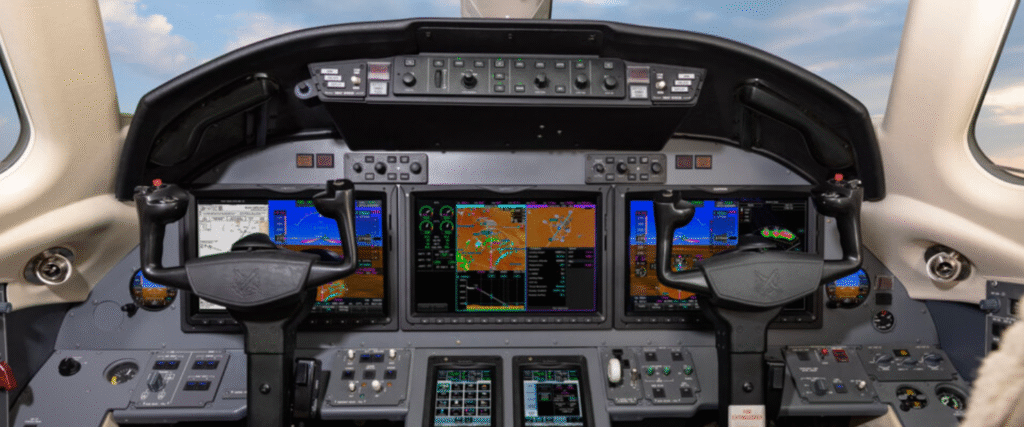
THE EVOLUTION OF THE INTEGRATED FLIGHT DECK
Traditional flight decks were a maze of analog instruments, requiring pilots to scan multiple dials to interpret flight data. Modern integrated avionics suites, such as Garmin’s G5000, consolidate all critical information onto large, high-resolution touch-screen displays. This paradigm shift has transformed the flying experience in several ways:
- Reduced Workload: Automation handles routine tasks, freeing pilots to focus on higher-level decision-making and strategic planning.
- Improved Efficiency: With all data available at a glance, pilots can make quicker, more informed decisions, enhancing efficiency and response times.
- Enhanced Safety: Centralized management of systems minimizes potential errors and provides seamless interoperability.
KEY ADVANCEMENTS IN MODERN AVIONICS
The capabilities of next-generation flight decks go far beyond simple consolidation. These systems leverage sophisticated technology to provide unparalleled situational awareness, even in the most challenging conditions.
1. Enhanced and Synthetic Vision Systems (EVS/SVS)
These systems provide an intuitive, 3D view of the external environment, combining terrain databases with infrared camera feeds.
- Synthetic Vision (SVS): Creates a computer-generated, photorealistic view of the world outside the cockpit, regardless of the actual weather.
- Enhanced Vision (EVS): Uses infrared sensors to “see” through darkness, fog, or heavy precipitation, highlighting the runway, taxiways, and other crucial ground features.
- Combined Vision: The latest systems fuse EVS and SVS into a single, intuitive display, providing the pilot with a “virtual visual” reference during all phases of flight.
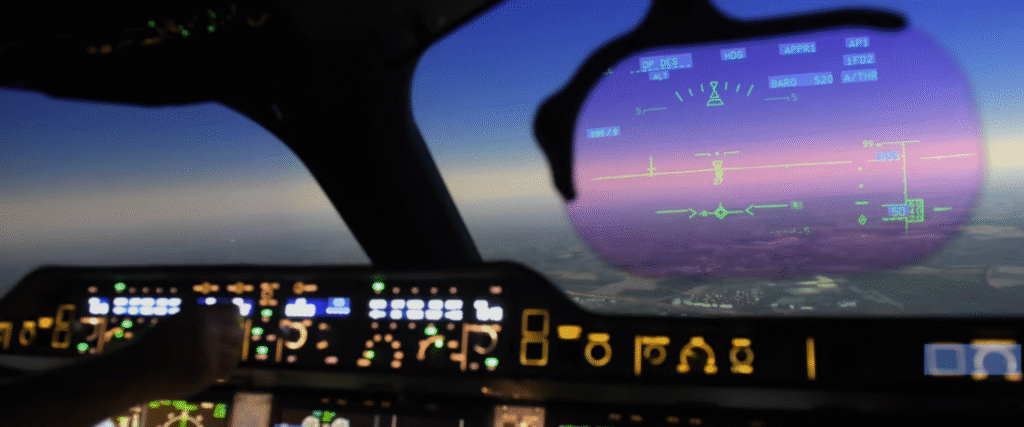
2. Head-Up Displays (HUDs)
- Originally a military technology, HUDs project critical flight data directly into the pilot’s line of sight on the windshield.
- Augmented Reality: The latest HUDs overlay digital information, such as flight paths and navigation cues, onto the pilot’s view of the external world.
- Improved Awareness: By keeping their eyes focused outside the cockpit, pilots can maintain a high level of situational awareness, especially during approach and landing.
3. Advanced Connectivity and Data Sharing
Modern flight decks are no longer isolated systems.
- Real-time Data: Advanced avionics enable real-time data sharing between the aircraft and ground operations, allowing for proactive maintenance and reduced downtime.
- Air Traffic Management: Technologies like ADS-B (Automatic Dependent Surveillance-Broadcast) provide continuous, real-time tracking information to air traffic control and other aircraft, enhancing situational awareness and safety.
4. AI-Powered Automation
Artificial intelligence is increasingly integrated into flight management systems, further reducing pilot workload and enhancing safety.
- Predictive Analytics: AI can monitor aircraft performance and predict potential issues before they become critical, optimizing maintenance schedules.
- Assistance Systems: “Virtual co-pilots” can offer verbal assistance, allowing pilots to use voice commands to manage aircraft systems.
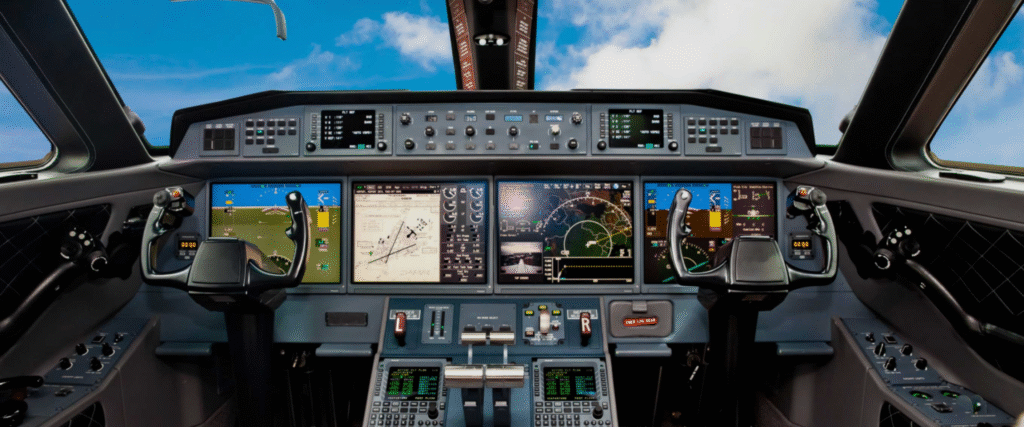
A SMART INVESTMENT FOR STRATEGIC BUYERS
As you evaluate business aircraft options, the quality and modernity of the avionics suite should be a key consideration. A next-generation cockpit is more than just a convenience; it’s a strategic asset that enhances safety, optimizes operations, and improves the aircraft’s long-term resale value. For operators of a used corporate plane looking to upgrade, retrofit solutions can often bring a legacy aircraft up to modern standards, but nothing compares to a fully integrated, next-generation flight deck.
At Holstein Aviation, our IADA certified professionals bring decades of transaction experience, real-time market intelligence and global reach. We guide our clients through every step of the process, ensuring confidence and clarity in today’s dynamic environment. If you’re preparing to sell your aircraft or buy an aircraft, Holstein Aviation is your trusted partner in business aviation.