
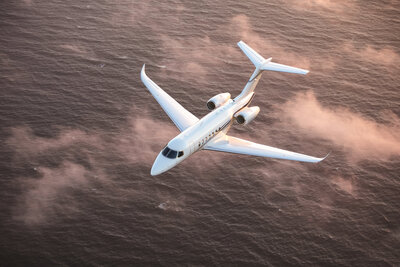
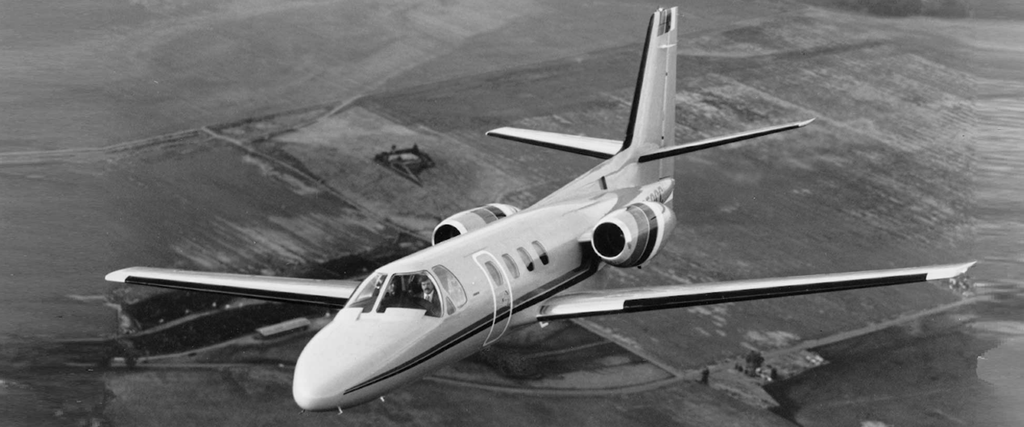
The Cessna Citation I was never the fastest business jet in the sky, and it was never meant to be. Cessna built it to be easy to fly, affordable to own, and able to use the same small airports as a twin turboprop. Competitors mocked it for being slow. More than five decades later, the Citation name sits on the largest business jet family in the world, with more than 8,000 aircraft delivered.
A Gap Between the King Air and the Learjet
By the 1960s, the Learjet 23 had shown that a small, fast business jet could sell. That put pressure on the established general aviation manufacturers, including Beechcraft, Piper, and Cessna, which were known for piston airplanes and twins.
Cessna saw an opening between two very different airplanes. Below it was the Beechcraft King Air 90, a turboprop that was comfortable and practical but slower than a jet. Above it was the Learjet, fast and exciting but demanding to fly and expensive to operate.
Cessna’s idea was a jet that was faster than the King Air but easier to fly than a Learjet, inexpensive to buy and maintain, and able to use short runways. The target buyer was the owner-pilot who wanted to fly his own jet.
The People Behind the Citation
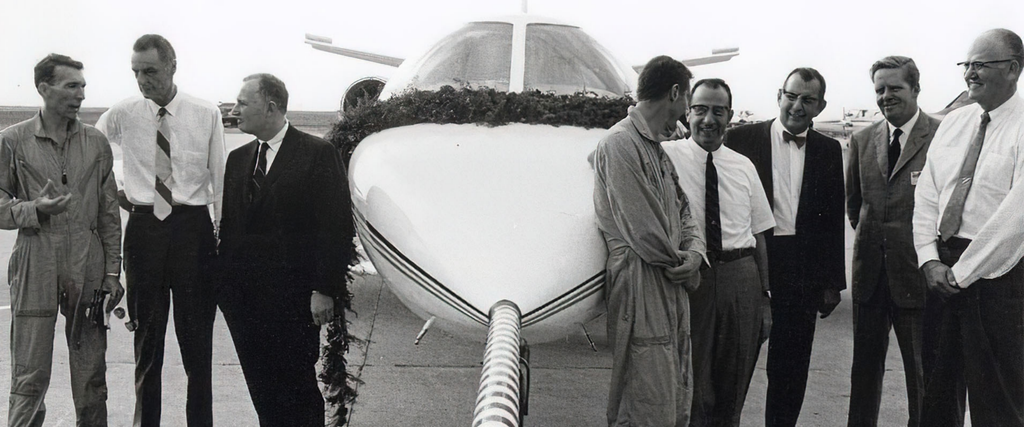
No single engineer gets credit for the Citation, but two people shaped it more than anyone else.
Dwane Wallace was Cessna’s president and later its chairman, and the nephew of company founder Clyde Cessna. He believed there was room for a business jet between turboprop twins and the expensive jets of the day, at a time when, as AOPA put it, “people thought Wallace was nuts.” He kept backing the airplane through early criticism and slow initial sales, and it became his last major project before he retired as chairman in 1975.
James B. Taylor came to Cessna from Pan Am’s business jet division, where he had sold the Dassault Falcon 20. Wallace hired him to run the jet’s marketing, and Taylor changed how the airplane was named and sold:
- He named it. Wallace disliked the “Fanjet 500” name, and Taylor suggested Citation, after the racehorse that won the 1948 Triple Crown.
- He sold it factory-direct. Taylor convinced Wallace that Citations should be sold directly by Cessna rather than through traditional dealerships.
- He built a new kind of sales team. His 80-person marketing operation identified about 27,000 potential business customers and hired salespeople who had no airplane sales background.
- He took the airplane to customers. His most memorable sales tool was the Citation Convincer, covered below.
The Citation Convincer
For buyers who were still on the fence, Taylor came up with the Citation Convincer, a mobile showroom built to bring the jet to the customer.
- What it was: A truck trailer fitted out as a traveling sales center.
- What was inside: A full-scale mock-up of the Citation’s cockpit and cabin, a conference room, and movie and slide projectors for the sales presentation.
- Where it went: It toured more than 10,000 miles across the United States and Canada.
The Convincer fit Cessna’s whole approach to the Citation. Instead of waiting for prospects to come to a factory or an airshow, Cessna brought a life-size Citation cabin to them, so a business owner could sit in the seat, look over the panel, and picture flying the airplane before committing to buy one.
From Fanjet 500 to Citation
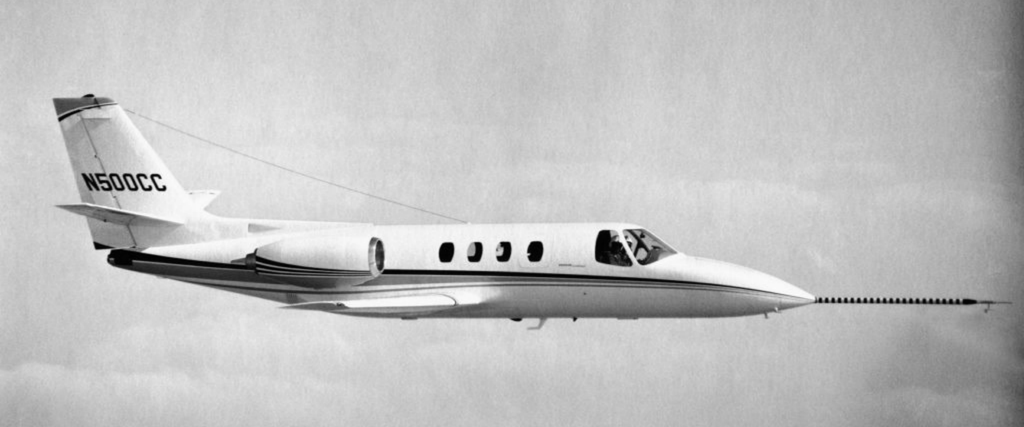
Cessna announced the Fanjet 500 in October 1968 as an eight-seat business jet that could operate from airfields used by light twins. Its price at the time was $695,000.
Two design choices set it apart from the jets of the day:
- Turbofans instead of turbojets. The Fanjet 500 used two Pratt & Whitney Canada JT15D turbofans, each producing about 2,200 pounds of thrust. Turbofans were quieter and more fuel efficient than the turbojets used on early business jets.
- A straight wing instead of a swept wing. The straight wing gave the airplane gentle handling and good short-field performance, at the cost of top speed.
The prototype first flew from Wichita on September 15, 1969. Development took longer than planned. Cessna lengthened the forward fuselage, moved the engine nacelles, and enlarged the tail before the airplane was ready. Renamed the Cessna 500 Citation, it received FAA certification on September 9, 1971.
“Nearjet” and “Slowtation”
The Citation’s slower cruise speed made it an easy target. Learjet salespeople called it the “Nearjet” and joked that it was vulnerable to “bird strikes from the rear.” Others nicknamed it the “Slowtation.”
The jokes, while funny and still used to this day, missed the point. Cessna was not trying to beat the Learjet on speed. It was building a jet that a pilot moving up from a twin could fly confidently, from runways the Learjet could not use as easily.
Improving the Formula
Cessna kept refining the airplane through the 1970s:
- 1974: Thrust reversers became optional.
- 1976: The upgraded Citation I arrived with improved JT15D-1A engines, a wingspan stretched from 43.9 to 47.1 feet, and a higher gross weight. The service ceiling rose from 35,000 to 41,000 feet.
- 1977: The Citation I/SP, certified for single-pilot operation, entered service. It made the Citation an even more natural step up for owner-pilots.
In its later form, the Citation I cruised at about 357 knots, carried five passengers, and had a range of roughly 1,300 nautical miles.
The Start of the Citation Family
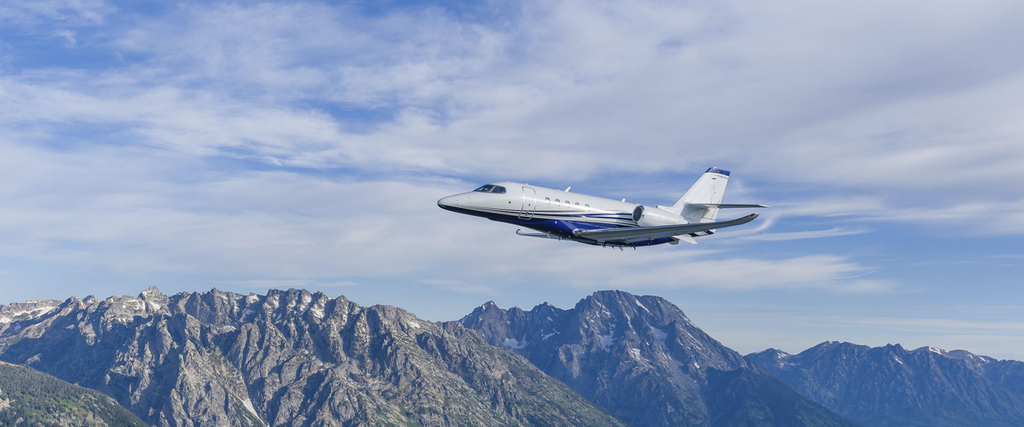
Production of the Citation I and I/SP ran from 1971 to 1985, with roughly 690 aircraft built. Production ended as rising engine prices narrowed the price gap with the larger Citation II, which most buyers chose instead.
That is the real legacy of the Citation I. It started a line that grew into the most successful family in business aviation:
- Citation II and Bravo: The stretched successor, with 1,184 built from 1978 to 2006
- Citation V, Ultra, and Encore: 774 built from 1989 to 2011
- CitationJet and the CJ series: In production since 1993
- Citation X: At one time the fastest civilian aircraft in the world
- Citation Excel, XLS, XLS+, and Ascend: More than 1,000 delivered, with the Ascend as the newest member of the line
- Latitude and Longitude: Today’s midsize and super-midsize Citations
By 2022, Cessna had delivered 8,000 Citations, which together had logged more than 41 million flight hours, making the Citation fleet the largest business jet fleet in the world.
Why It Still Matters
The Learjet proved a business jet could be fast. The Citation I proved one could be approachable. By choosing turbofans, a straight wing, and short-field performance over outright speed, Cessna opened jet ownership to pilots and companies that had been flying twins and turboprops. The Citation I/SP took that further with single-pilot certification, a path that the CJ series and many of today’s light jets still follow.
Contact Holstein Aviation to talk through where today’s business aircraft came from, and where the market is headed next.
Sources: