

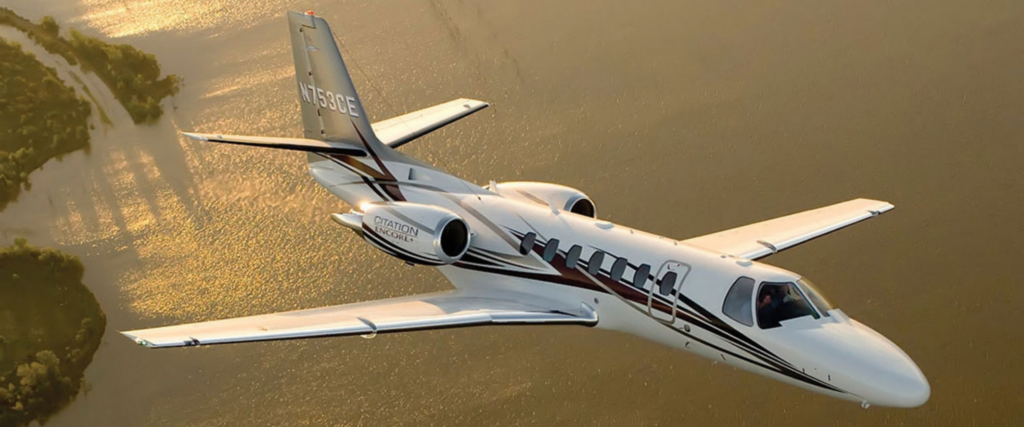
For roughly 40 years, owners of legacy Cessna Citations could fly their aircraft solo with the right training and a logbook endorsement. That ended this week. On September 28, 2026, the FAA published a notice in the Federal Register rescinding every Citation single-pilot exemption for the older, two-pilot-certified Citation models, effective September 29. There was no phase-in period and no comment window.
If you own, operate, or are shopping for a Citation I, II, Bravo, V, Ultra, or Encore, this change affects how you fly the airplane, what it costs to operate, and how the market will value it. Here is what happened, why the FAA did it, and what it means for owners, buyers, and sellers.
What Changed and Which Citations Are Affected
The original Citation single pilot exemption was issued to Cessna in 1984 as Exemption No. 4050. Over time, the FAA extended similar exemptions to 14 training providers, which trained pilots and signed them off to fly these jets without a second pilot. Those endorsements are now void.
The rescission covers eight transport category (Part 25) variants of the Citation 500 series, all of which were certified to require two pilots:
- Model 500 (Citation and Citation I)
- Model 550 (Citation II)
- Model 550 Bravo
- Model S550 (Citation S/II)
- Model 552 (the Navy T-47A)
- Model 560 (Citation V, Ultra, Encore, and Encore+)
Aviation industry outlet AvBrief estimates the change touches roughly 1,250 aircraft and between 400 and 800 pilots who held single-pilot endorsements.
Just as important is what is not affected. Citations that were certified for single-pilot operation from the start are untouched, including:
- Citation 501 and 551 “SP” models (Part 23)
- Citation Mustang (CE-510)
- The CitationJet and CJ series (CE-525)
In practical terms, owners of affected aircraft must now fly with a qualified second in command, as the aircraft was originally certificated. One piece of good news: pilots who completed a 61.58 proficiency check under the exemption can still use that check to meet pilot-in-command requirements in a two-pilot crew.
Why the FAA Pulled the Exemptions
The FAA began reviewing the program in 2024 and pointed to two problems: safety data and widespread non-compliance.
On safety, the agency found that Part 25 Citation 500-series aircraft flown single pilot were involved in approximately twice the rate of accidents of the Part 23 Citations (the 501, 551, Mustang, and CJ series) that were designed for one pilot. The FAA also cited two recent fatal accidents:
- May 22, 2025, near San Diego: the pilot had received an improper check about six months before the accident.
- December 18, 2025, in Statesville, North Carolina: the aircraft was being flown without a required second in command.
Both accidents remain under NTSB investigation, and a probable cause has not yet been determined for either one.
On compliance, the findings were even harsher. The FAA says 13 of the 14 training providers holding exemptions were either denied extensions or had their exemptions rescinded. Problems included:
- Companies without an exemption providing training under another company’s exemption
- Incomplete training records
- Training conducted in unauthorized devices
- Falsified records by some designated pilot examiners, who have since lost their designee authority
The FAA also flagged a structural gap. Once a pilot was signed off, the training provider had no ongoing involvement, so many pilots likely had no idea when the exemption they relied on had expired or been terminated.
Who Feels It Most
The biggest impact falls on owner-pilots. A large part of the appeal of a legacy Citation has always been that a capable owner could fly it alone, with jet speed and a roomy cabin at a fraction of the cost of newer aircraft. For those owners, every flight now needs a second qualified pilot, which means:
- Hiring a full-time or contract second in command for every trip
- Paying for that pilot’s type training, recurrent training, and travel
- Revisiting insurance, since underwriters price crew composition and experience
- Giving up a seat in the cabin on trips that were previously flown solo
Flight departments and charter operators that already fly these aircraft with two pilots will see little operational change.
The industry is pushing back on how the change was made. NBAA said that rescinding the exemptions “in full, effective immediately upon publication in the Federal Register and without direct notice to affected operators, raises serious questions,” and asked the FAA to share its safety analysis. Citation Jet Pilots (CJP) filed Freedom of Information Act requests for the data behind the decision. Whether that leads to any modification is an open question, but owners should plan around the rule as it stands today.
What It Means for the Market
It is too early for hard transaction data, but the direction is easy to see. The pool of buyers for legacy two-pilot Citations just got smaller, because the owner-pilot who wanted to fly solo is no longer a buyer for these airplanes.
If you are selling an affected Citation:
- Expect some owner-pilot buyers to walk away or reprice their offers
- Your strongest buyers are now operators and owners who already planned to fly with two pilots
- Pricing and positioning matter more than ever, so a realistic read on the market is key before you list
If you are buying:
- Budget for a two-pilot operation from day one, including a second pilot and insurance for that crew
- Motivated sellers may create opportunities on well-maintained airframes
- If you want to fly yourself, look at the Citations built for it: the 501 and 551 SP models, the Mustang, and the CJ series
That last point is worth watching. Owner-pilots who are leaving legacy Citations will likely move toward single-pilot-certified aircraft, which could firm up demand for Mustangs, CJs, and SP-certified models in the months ahead.
Talk to Someone Who Knows the Citation Market
The end of the Citation single pilot exemption is one of the biggest regulatory shifts for light and midsize jet owners in years. Whether you own an affected aircraft, are weighing a sale, or want a Citation you can fly yourself, the right move depends on your mission and your numbers. Contact Holstein Aviation to talk through how this change affects your aircraft and your options.
Sources
- Federal Register: Notice of Policy Change and Rescission of Single-Pilot Training Exemptions for Certain Cessna Aircraft
- NBAA: NBAA, CJP Question FAA Rescission of Legacy Citation Single-Pilot Exemptions
- AvWeb: Legacy Citations Lose Single-Pilot Exemptions
- AvBrief: FAA Bans Single-Pilot Citation Exemptions
- Flying: FAA Pulls Citation Single-Pilot Authorization
- FlightGlobal: Citation operators seek to scrutinise safety data