
No call sign in aviation carries more weight than Air Force One. Whenever the President of the United States is aboard any Air Force aircraft, it becomes Air Force One, and Air Force One history is really the story of how presidential air travel evolved from a converted cargo plane in World War II to the customized 747 that is now the most recognizable aircraft in the world. For anyone who thinks about how mission requirements, range, and cabin configuration shape an aircraft purchase, that history is worth walking through from the beginning.
Before There Was a Name: The Sacred Cow and the Independence
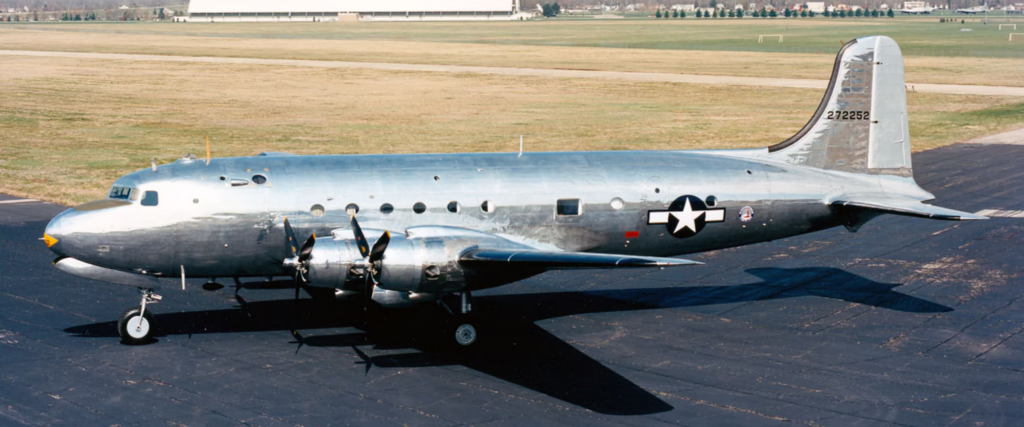
The first aircraft built specifically for presidential use was the Douglas VC-54C Sacred Cow, delivered in 1945 for Franklin Roosevelt. It included a private stateroom and a custom-built elevator so Roosevelt, who used a wheelchair, could board without assistance. Roosevelt flew it only once, to the Yalta Conference, before Harry Truman inherited it and used it to sign the National Security Act of 1947 while airborne, the law that created the U.S. Air Force itself.
Truman replaced the Sacred Cow in 1947 with a larger Douglas VC-118 he named the Independence, distinguished by an eagle’s head painted on the nose. Neither aircraft carried the Air Force One call sign. That came a few years later, and almost by accident.
How “Air Force One” Became the Name
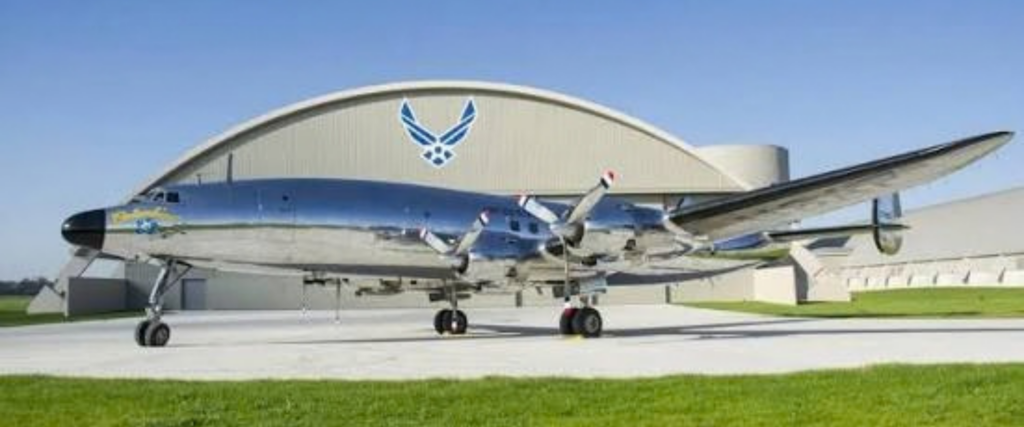
President Eisenhower flew aboard a pair of Lockheed Constellations named Columbine II and Columbine III through the 1950s. In 1953, air traffic control briefly confused Columbine II’s flight number with a commercial Eastern Air Lines flight operating in the same airspace, a mix-up serious enough that the Air Force created a permanent fix: any Air Force aircraft carrying the president would use the unique call sign Air Force One. The aircraft would change many times over. The name never has.
The Jet Age Arrives
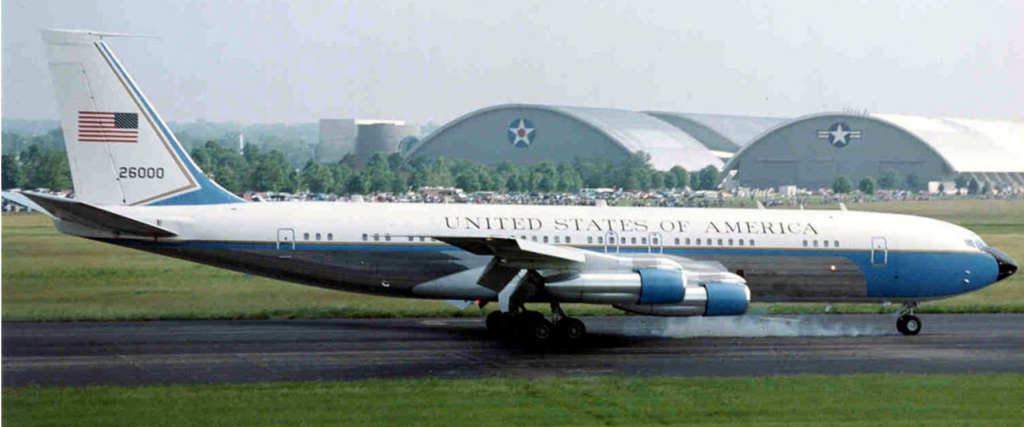
Eisenhower became the first president to fly aboard a jet aircraft in 1959, aboard a Boeing VC-137, the military version of the 707. That set the stage for the aircraft most people still picture when they think of the presidency in motion: SAM 26000, delivered in 1962. Industrial designer Raymond Loewy created the blue and white livery for SAM 26000, built around the idea that the aircraft should look distinctly non-military, more like a symbol of the country than a piece of hardware. A modified version of that same color scheme is still the basis for the presidential livery flying today.
SAM 26000 carried John F. Kennedy to Dallas on the day he was assassinated, and Lyndon Johnson was sworn in as president aboard the aircraft on the tarmac before it flew home. It went on to serve Johnson and Nixon before a second VC-137, SAM 27000, took over in 1972 and carried seven presidents, from Nixon through George W. Bush, making it the longest-serving Air Force One on record.
Air Force One’s Understudy
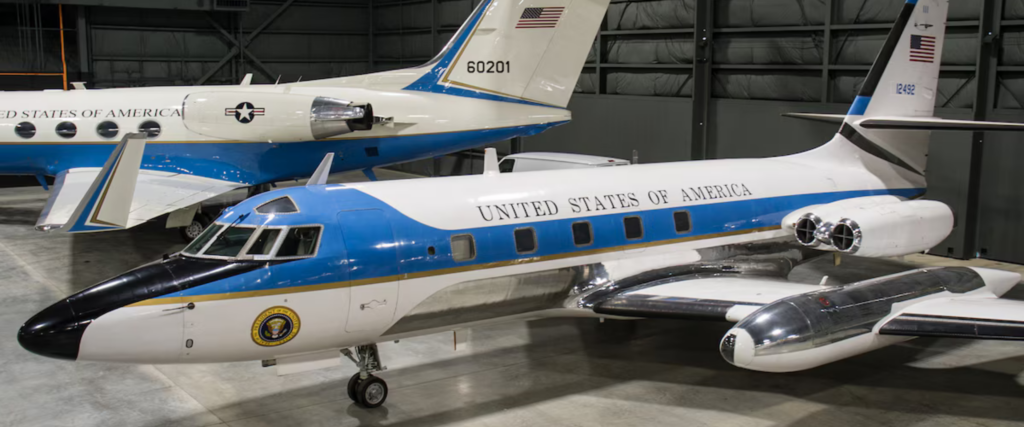
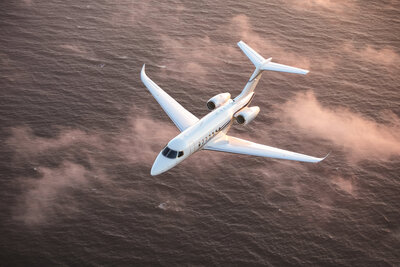
The two VC-137s weren’t flying every presidential mission alone. A fleet of six Lockheed VC-140B JetStars also carried the Air Force One call sign starting in 1961, handling shorter VIP hops out of Andrews Air Force Base for every president from Kennedy through Reagan. Jimmy Carter used his so often for quick trips that it earned its own nickname within the Special Air Missions Wing: “Peanut One.” It’s a reminder that Air Force One was never just one airplane at a time, it was whichever Air Force aircraft the president happened to be on.
Stepping Up to the 747
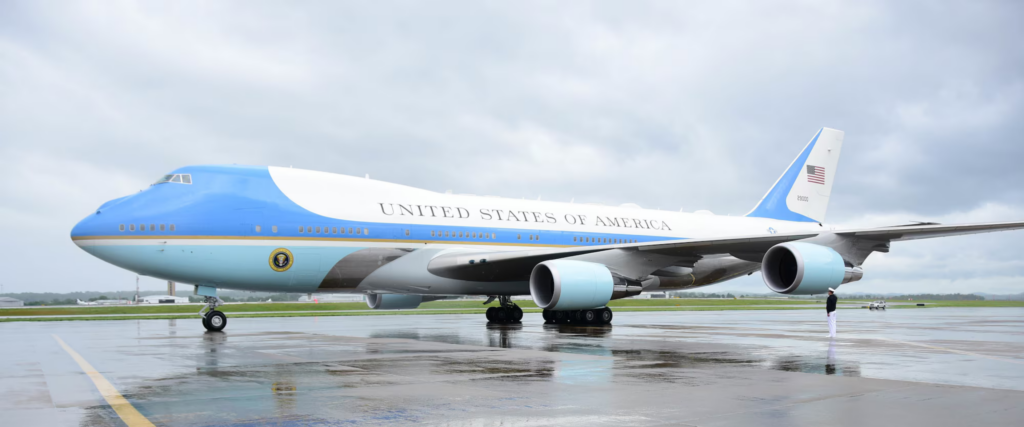
The aircraft most associated with Air Force One today, a heavily customized Boeing 747-200B known as the VC-25A, entered service in 1990. Two identical aircraft, tail numbers 28000 and 29000, were built with in-flight refueling capability, extensive electronic countermeasures, and a self-sufficient galley and medical suite, giving the pair essentially unlimited range and the ability to operate independently anywhere in the world. They have carried every president from George H.W. Bush to the present day.
The Next Generation, Running Late
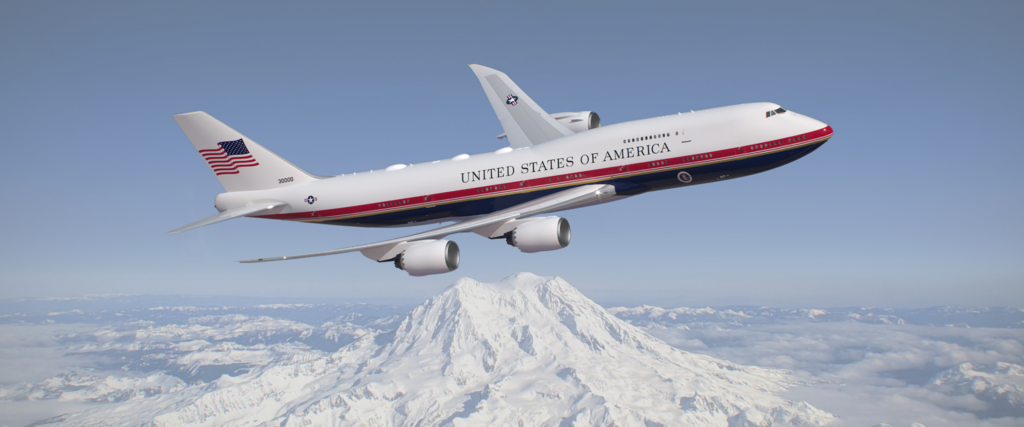
A replacement program, the VC-25B, was supposed to bring two new 747-8-based aircraft into service by 2024. That timeline slipped repeatedly. Boeing has absorbed roughly $3 billion in cost overruns on the program, and the two fully outfitted VC-25B aircraft are not expected to reach the Presidential Airlift Group until 2028, with power-on testing targeted for late 2026 and first flight in 2027.
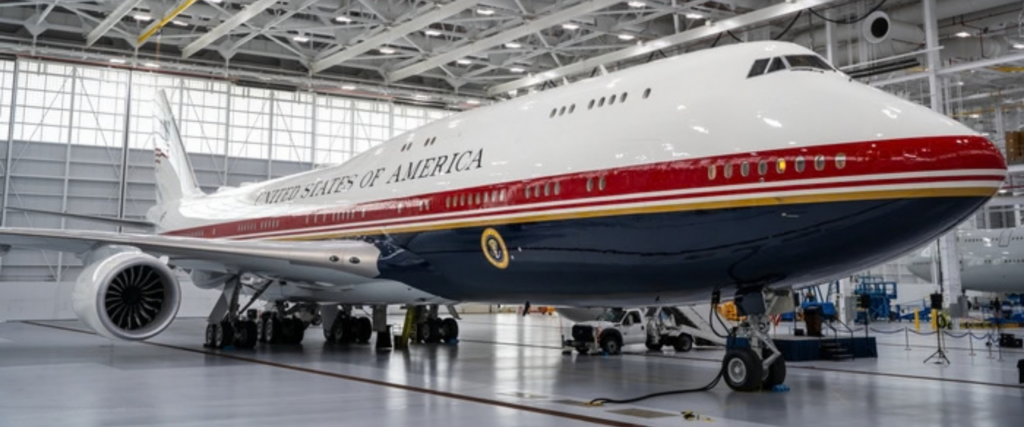
To close that gap, the Air Force accepted a donated, previously Qatari-owned Boeing 747-8i as an interim “bridge” aircraft. After modification and a repaint into a red, white, and blue livery, it entered presidential service in July 2026, becoming the first new airframe to carry the Air Force One call sign in more than three decades while the permanent replacements finish testing.
What the Lineage Actually Shows
Strip away the security detail and the ceremony, and the history of Air Force One tracks the same decisions every aircraft buyer eventually makes:
- Mission requirements dictate the airframe. Range, self-sufficiency, and cabin configuration have driven every upgrade, from the Sacred Cow’s wheelchair elevator to the VC-25A’s unlimited range.
- Customization takes time. Every presidential aircraft, without exception, has required extensive modification before entering service, and every one of those programs has run long.
- A bridge solution beats an empty hangar. Rather than wait years for a fully customized aircraft, the Air Force chose to field an interim aircraft that meets the mission today, a trade-off private buyers weigh constantly between ordering new and buying available inventory.
- The right aircraft changes with the mission, not the calendar. More than a dozen different aircraft across eight decades reflect changing needs, not just changing technology.
Talk to Someone Who Thinks About Mission Fit Every Day
Whether you’re chartering a light jet or evaluating a long-range aircraft for a growing set of missions, the same principle behind eight decades of Air Force One decisions applies to your own search: the right aircraft is the one built around what you actually need to accomplish, not just what happens to be available.
Contact Holstein Aviation to talk through what that looks like for your next aircraft.