
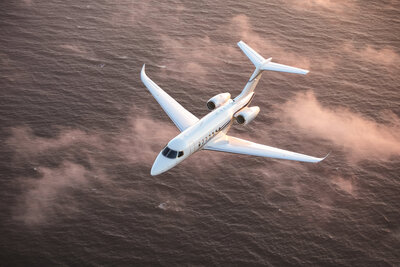

Kansas’s business aviation market tells a story you won’t find in most states: it’s not just where aircraft are based, it’s where they’re built, maintained, and — in a meaningful number of cases — parted out. Based on the current in-state fleet, 458 business jets and turboprops call Kansas home, spread across a mix of large-cabin jets, light jets, turboprops, and owner-flown aircraft, with a heavy Wichita-built imprint running through the whole list.
Here’s a look at the Kansas business aviation market by the numbers. Every aircraft referenced below is a business jet or turboprop; the dataset does not include piston aircraft, helicopters, or airliners.
THE OLDEST FLEET IN THE STATES WE’VE PROFILED
The average manufacture year across the 458 in-operation aircraft is 2000, with a median of 2001, and just 17 percent of the fleet (78 aircraft) was built in 2015 or later. Twenty-six percent (118 aircraft) date back before 1990 — the oldest skew of any market we’ve looked at so far, well beyond Colorado’s or Missouri’s. Part of that is a genuine legacy-equipment story, and part of it is inventory: a meaningful slice of Kansas’s registered fleet sits with a parts and teardown operator rather than in active daily service (more on that below).
Ownership structure leans overwhelmingly toward aircraft held outright:
- Wholly owned: 436 aircraft (95 percent)
- Shared ownership: 22 aircraft (5 percent)
- Fractional ownership program: effectively none
As in most owner- and company-flown markets, fractional programs are all but absent in Kansas.
WHERE THE FLEET LIVES
Of the 458 aircraft in the dataset, 336 have a listed home base, spread across 33 airports. The rest — about 122 aircraft, or roughly a quarter of the state’s registered fleet — carry no base airport at all, which lines up almost entirely with aircraft held by a single parts and salvage operator rather than aircraft in day-to-day flying service (again, more below).
Among the aircraft with a known base, the fleet splits between two real hubs:
- Wichita Dwight D. Eisenhower National Airport: 67 aircraft
- Colonel James Jabara Airport: 55 aircraft
- New Century Aircenter Airport: 55 aircraft
- Johnson County Executive Airport: 26 aircraft
- Forbes Field Airport: 16 aircraft
- Lloyd Stearman Field Airport: 15 aircraft
- Liberal Municipal Airport: 15 aircraft
- Newton City-County Airport: 11 aircraft
- Garden City Regional Airport: 9 aircraft
- Dodge City Municipal Airport: 8 aircraft
Group those by metro and the pattern is clear: Wichita’s two fields (Eisenhower and Jabara) together hold 36 percent of the based fleet, while the Kansas City-area fields (New Century and Johnson County Executive) hold another 24 percent — combined, the state’s two metro clusters account for 60 percent of every based aircraft in Kansas. Extend that to the top six airports and you’re at 70 percent. It’s a genuinely bipolar market: Wichita as the historic manufacturing and maintenance center, Kansas City’s Johnson County side as the corporate-metro counterpart, with a scattering of southwest Kansas fields (Liberal, Garden City, Dodge City) forming a smaller agricultural-and-energy-driven tail.
WHAT KANSAS FLIES
Citation leads Kansas with 112 aircraft statewide — no surprise in Cessna’s hometown state. King Air is second with 81 aircraft, followed by Beechjet (39), Falcon (31), Pilatus (27), Learjet (24), Conquest (21), Hawker (17), Challenger (16), and Piper (15).
The King Air and Beechjet numbers stand out here more than in neighboring states — a direct reflection of Wichita’s Beechcraft heritage. By specific model:
- Beechjet 400A: 36
- King Air C90B: 12
- Pilatus PC-12 NG: 12
- Conquest I: 12
- King Air 350: 12
- King Air B200: 11
- Citation Excel: 10
- Citation Mustang: 9
- Citation CJ4: 9
- Hawker 400XP: 9
The Beechjet 400A alone accounts for nearly 8 percent of the entire statewide fleet — a far more concentrated top model than Colorado’s or Missouri’s, and another marker of how closely tied the Kansas fleet is to what was actually built in-state.
WHAT’S ON THE MARKET RIGHT NOW
Of the 458 aircraft based in Kansas, 32 are currently listed for sale or available on inquiry, or about 7 percent of the total fleet. No single model stands out — Citation Longitude, Citation XLS Gen 2, and Falcon 50 each have two units listed, and the remaining inventory is a long tail of single listings spanning from the Astra 1125SPX and Conquest I up through Falcon 100/900/2000/50EX and Gulfstream G-IVSP/G450. That spread points to turnover happening broadly across the market rather than concentrated in one price tier.
THE OPERATORS BEHIND THE FLEET
This is where Kansas looks different from any state we’ve profiled so far:
- Dodson International Parts, Inc.: 88 aircraft
- Clemens Aviation Management, LLC: 20 aircraft
- Vaerus Aviation, Inc.: 11 aircraft
- Textron Aviation, Inc.: 10 aircraft
- Clemens Aviation, LLC: 9 aircraft
- Lyddon Aero Center, Inc.: 9 aircraft
- Koch Industries, Inc.: 9 aircraft
- Airshare: 9 aircraft
Dodson International Parts — a Rago, Kansas-based aircraft parts and teardown company — is listed as the operator of 88 aircraft, nearly a fifth of the entire state fleet, and the vast majority of those have no active base airport in the data. That’s not a flight department; it’s a parts inventory, and it’s a genuinely distinctive feature of the Kansas market compared to Colorado, Missouri, or most other states, where the top “operators” are charter and management companies flying active aircraft. Strip that segment out and the operator landscape looks much more familiar, led by regional management names like Clemens Aviation and Vaerus, plus Textron Aviation itself and Koch Industries’ in-house flight department.
FLEET ACTIVITY
Among aircraft with recorded flight-hour data, the average airframe in Kansas’s fleet has logged just over 5,570 total flight hours — the highest of the three states we’ve profiled, consistent with an older fleet that’s been in service longer, even accounting for the parts-inventory segment sitting at the low-utilization end of that average.
THE BOTTOM LINE
Kansas’s business aviation market is shaped as much by what’s built and maintained there as by what’s actively flying there. Wichita’s two fields and the Kansas City-area fields together hold 60 percent of the based fleet, Citation and King Air lead a model mix that skews heavily Wichita-built, and a genuinely unusual parts-and-teardown segment — nearly a fifth of the statewide total — sets Kansas apart from every other market we’ve looked at. For owners and buyers trying to understand where they fit into this market, the data points to a clear pattern: Kansas is an aircraft-manufacturing-and-maintenance hub first, and a flying market second, with the oldest average fleet age we’ve seen so far and real depth in both Wichita and the Kansas City metro.
Contact Holstein Aviation to talk through where your aircraft fits into the Kansas market, whether you’re buying, selling, or reevaluating how it’s managed.