
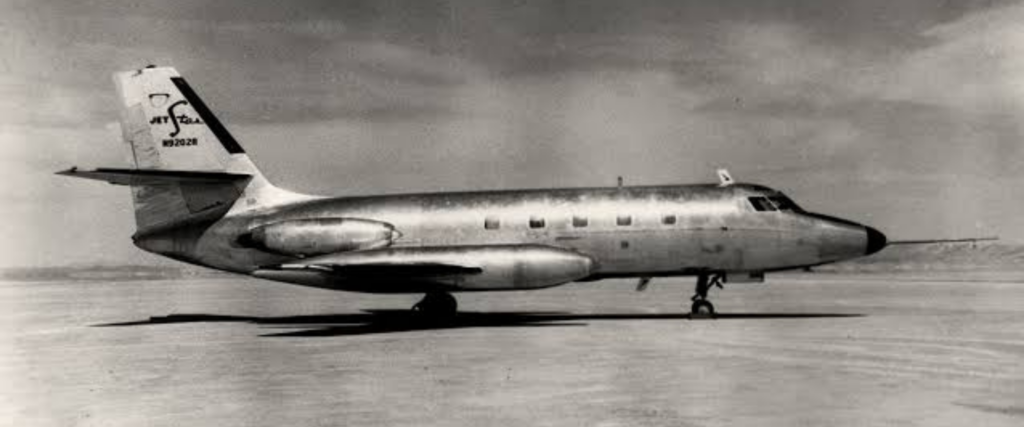
Long before Bill Lear’s Learjet became the generic word for a private jet, there was a four-engine Lockheed with a shape unlike anything else in the sky. The JetStar first flew in 1957, six years before the Learjet 23, and it has a real claim to being the first true business jet ever built, purpose-designed from the start rather than adapted from a military airframe.
Here’s the case for why the JetStar deserves a second look, and why it quietly disappeared from the skies it helped open up.
Born in the Skunk Works
The JetStar’s pedigree is one of the best-kept secrets in business aviation history. It was designed by Kelly Johnson’s team at Lockheed’s Skunk Works in Burbank, the same group responsible for the U-2 spy plane and later the SR-71 Blackbird. Lockheed took the program from approval to a completed prototype in just 241 days, a pace that still sounds aggressive by today’s standards.
Two prototypes came out of the Skunk Works before production moved to Lockheed’s Marietta, Georgia plant, where 202 more were built, including 16 delivered to the U.S. Air Force as the C-140. The idea of a Cold War black-budget engineering team also building a corporate jet is a strange bit of aviation trivia, but it’s exactly what happened.
Four Engines, One Bold Bet
The JetStar’s most distinctive feature is its silhouette: four engines mounted in pairs at the rear of the fuselage. That layout wasn’t just a styling choice. In the late 1950s, twin-engine reliability hadn’t yet earned the trust it has today, and a four-engine design gave operators redundancy for a mission profile that increasingly included longer overwater and international legs.
It gave the JetStar a genuinely muscular look and sound that set it apart from every light jet that followed. It also became the airplane’s biggest long-term liability, since four engines is a lot of hardware to maintain and fuel once operating costs started to matter more than raw capability.
Lockheed tried to address that liability directly in 1976 with the JetStar II, swapping the original Pratt & Whitney JT12 turbojets for Garrett TFE731 turbofans. The new engines cut fuel burn and noise significantly, helping the airframe meet tightening regulations, but by then the fundamental math of operating four engines instead of two was already working against it.
Serious Numbers for 1957
The JetStar backed up its looks with real performance. It cruised at roughly 445 knots, around 510 miles per hour, and could cover up to about 2,476 nautical miles with a typical payload, enough for genuine coast-to-coast and transatlantic-adjacent missions at a time when most business aircraft were regional tools at best. Cabins were configured for eight passengers with a full-sized lavatory, or a denser ten-seat layout for operators who valued headcount over legroom.
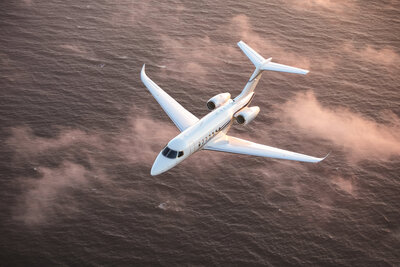
At a maximum weight of roughly 44,500 pounds, it was also a notably heavy aircraft for its era, outweighing even today’s super-midsize jets like the Challenger 3500 (40,600 pounds) and landing closer to the entry-level large-cabin category on a pure weight basis.
Elvis’s Two JetStars
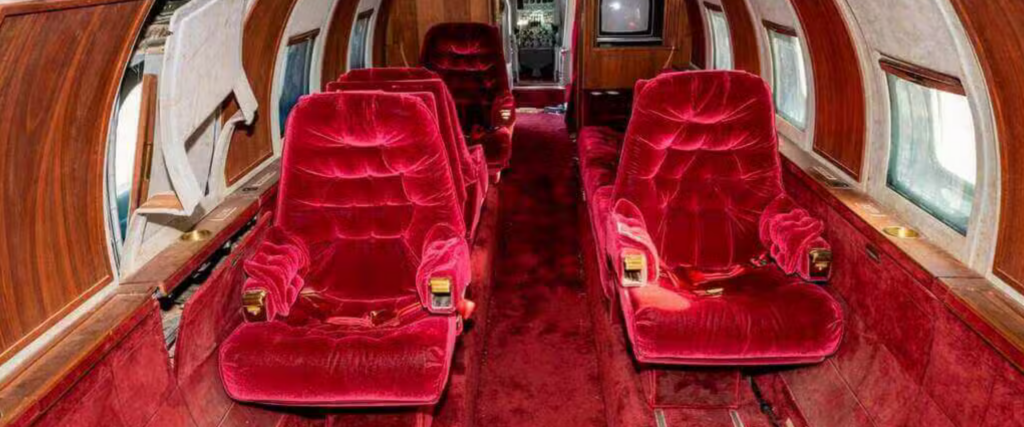
No JetStar history is complete without Elvis Presley, and the full story is better than the version most people know. In September 1975, while waiting on renovations to his Convair 880, the Lisa Marie, Presley traded in a Gulfstream and a Jet Commander for a used 1960 JetStar, paying roughly $900,000 for an airplane that was already 15 years old. He nicknamed it Hound Dog II and flew it with a four-person crew: a pilot, co-pilot, flight engineer, and flight attendant.
That would have been a fitting enough ending, but Elvis wasn’t done. In December 1976, he traded in a Falcon for a second JetStar, a 1962 model this time, paying $840,000 for an airplane he’d sell less than a year later. Where Hound Dog II’s cabin was relatively conservative for a rock star’s jet, the second one wasn’t: it was painted bright red with pink velvet seats inside.
Hound Dog II still sits on permanent display at Graceland today. The second JetStar resurfaced decades later at a Mecum auction in 2023, fittingly held on what would have been Presley’s 88th birthday, and sold for $260,000, a fraction of what he originally paid for it.
Elvis wasn’t the only well-known name attached to a JetStar. A few others worth knowing:
- Bob Hope bought a 1967 JetStar 731 (registration N18BH) and kept it in his personal fleet until he died in 2003, one of the longer celebrity ownership runs of any JetStar on record.
- Richard Nixon flew on Air Force JetStars throughout his presidency and liked the airplane enough to buy his own after leaving office.
- Goldfinger’s private jet, in the 1964 James Bond film of the same name, was a Lockheed JetStar, giving the airplane a permanent, if fictional, line on its resume.
Air Force One’s Quiet Understudy
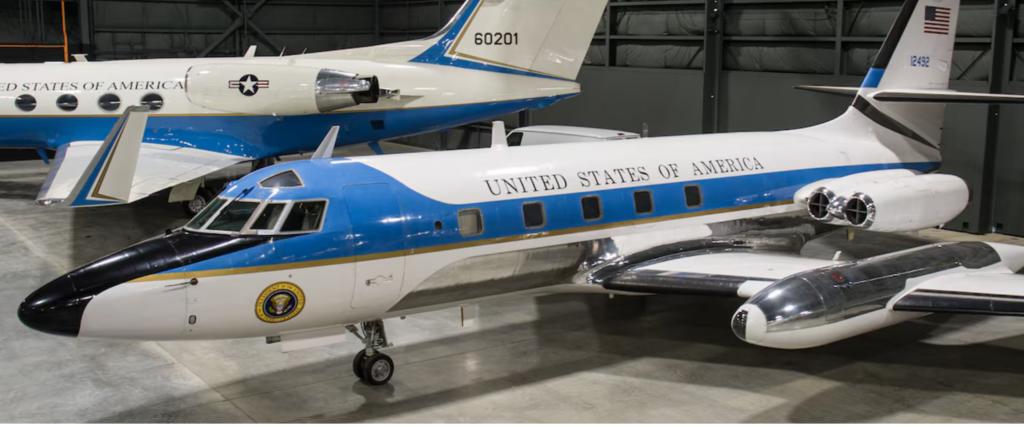
Six Lockheed VC-140B JetStars went into service with the U.S. Air Force in 1961, flying VIP transport out of Andrews Air Force Base for the 89th Military Airlift Wing. Every president from John F. Kennedy through Ronald Reagan flew on one, and the JetStar carried the call sign “Air Force One” whenever the president was aboard.
President Carter used his VC-140B so often for short trips that it earned its own nickname within the Special Air Missions Wing: “Peanut One.” It’s a small detail, but it says something about how thoroughly the JetStar worked its way into the fabric of American aviation history, well beyond the corporate flight departments it was originally built for.
A NASA Research Platform
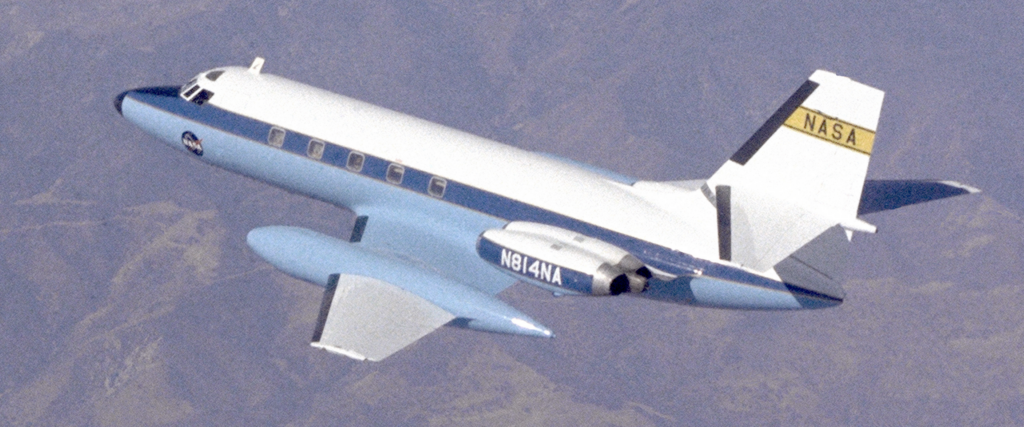
NASA also flew a modified JetStar out of its Dryden Flight Research Center from 1964 to 1989, using it as a testbed for acoustic research on advanced propeller designs, laminar-flow control studies, and airborne simulation of other aircraft types’ flight characteristics. It wasn’t part of astronaut training, that job belonged to the T-38 Talon, but the JetStar quietly logged 25 years of real aeronautical research work for the agency.
Why It Faded
The same four engines that gave the JetStar its distinctive profile and range capability eventually became the reason it disappeared from ramps. Rising fuel costs through the 1970s and 80s hit four-engine aircraft harder than twins, and tightening Stage 2 and Stage 3 noise regulations pushed many older, louder airframes out of service entirely. By the time lighter, more fuel-efficient twinjets matured through the 1980s and 90s, there was little economic case left for keeping a JetStar flying.
Very few remain airworthy today. Most of what’s left sits in museums, on static display, or in the hands of dedicated collectors who keep them running out of pure appreciation for the airplane.
The Bottom Line
The Lockheed JetStar was flying missions and setting precedents years before the aircraft that gets called the first business jet ever left the ground. It was designed by the same team that built America’s most famous spy planes, flew presidents, supported NASA research, and carried Elvis Presley, Bob Hope, and Richard Nixon around the country, all before fuel costs and noise rules caught up with it. It’s a reminder that the history of business aviation has more than one origin story, and the JetStar’s is one of the better ones.
Contact Holstein Aviation to talk through where today’s business jets came from, and where the market is headed next.