

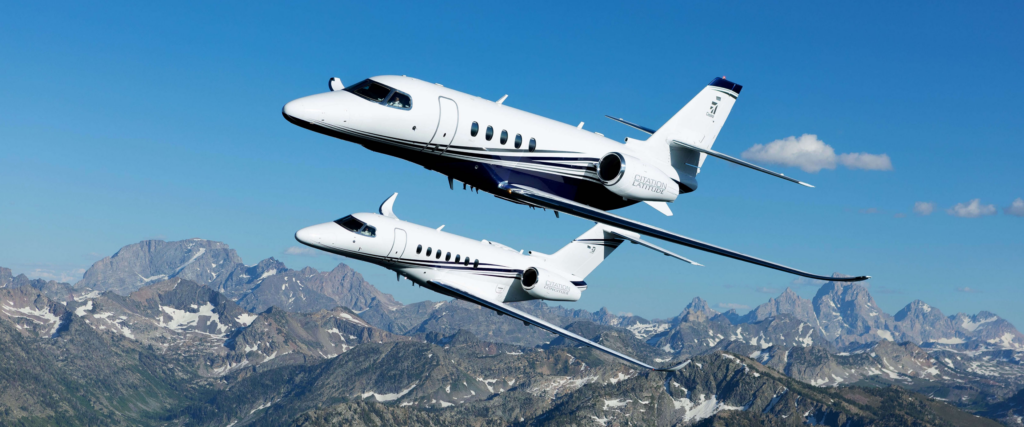
After working with private jet buyers across every stage of the process, certain patterns emerge. The spreadsheets look different. The aircraft requirements vary. The timelines stretch and compress. But the underlying aircraft ownership psychology — the way buyers actually think, hesitate, and ultimately decide — follows a remarkably consistent arc.
Understanding that arc doesn’t just make for an interesting case study. It helps buyers recognize where they are in their own process, identify the hesitations that are worth sitting with versus the ones that are just noise, and ultimately make a decision they feel good about for years.
Here’s what that arc actually looks like.
It Starts With a Feeling, Not a Spreadsheet
Almost no one starts the private jet buying process with a financial model. They start with an experience — a flight on a colleague’s aircraft, a charter trip that changed how they thought about travel, a moment where the inefficiency of commercial aviation cost them something they couldn’t get back.
That experience creates a feeling: this is possible, and I want it.
The spreadsheet comes later, as justification. The financial analysis is real and it matters — but it’s rarely what initiates the process. Buyers who pretend otherwise usually aren’t being fully honest with themselves, and that self-deception can lead to decisions that look rational on paper but miss what the buyer actually needed.
The feeling that starts the process is valid data. A good advisor takes it seriously.
The Research Phase Is Longer Than Most Buyers Admit
Once the idea takes hold, buyers typically spend a significant amount of time — often months, sometimes years — in a quiet research phase before they ever contact a broker or attend a demo flight.
During this phase, they’re absorbing information: reading about aircraft types, following the market loosely, talking to friends who own aircraft, forming opinions about which models they’re drawn to and which they’re not. By the time they make their first call, many buyers arrive with strong preferences already formed — preferences that are sometimes well-founded and sometimes based on incomplete information.
This is why a good broker’s first job isn’t to start showing aircraft. It’s to understand how the buyer thinks and what they’ve concluded during that research phase — and to gently correct assumptions that could lead them in the wrong direction.
The Moment of Permission
One of the most consistent patterns in the buying process is what might be called the “permission moment” — the point at which a buyer who is financially capable of purchasing an aircraft finally decides they’re allowed to do it.
For many buyers, the hesitation isn’t financial. They can afford the aircraft. The hesitation is psychological: Is this responsible? Is this the right time? What will people think?
The permission moment often comes from outside. A peer who made the same purchase. A business milestone that feels like it justifies the decision. A conversation with an advisor who helps them see that the economics are more defensible than they thought. Sometimes it’s simply the accumulation of enough commercial travel misery that the psychological resistance finally gives way.
Understanding this dynamic is important because buyers in the pre-permission phase often don’t respond to more information about aircraft specifications. What they’re working through is something else entirely — and pushing harder with data isn’t what moves them forward.
Fear of the Wrong Decision Slows Everything Down
The single most common source of delay in the buying process is fear of making the wrong choice.
Private jets are expensive assets. The market is specialized. Most buyers are doing this for the first time. The combination of high stakes, limited experience, and information asymmetry creates significant anxiety — even for people who make large, complex decisions in business routinely.
This anxiety manifests in different ways. Some buyers over-research, accumulating more information without getting closer to a decision. Others narrow to a specific aircraft and then second-guess themselves repeatedly at the finish line. Others start the process with genuine enthusiasm and then go quiet for weeks at a time.
The antidote isn’t more information. It’s trust — specifically, trust in an advisor who has seen this process many times and can provide honest perspective on whether the hesitation is substantive or just the normal friction of a large decision.
The Rational and Emotional Have to Align
Here’s something that doesn’t get said enough: a purchase of this size needs to make sense both financially and personally. When those two things are out of alignment — when the financial case is strong but the buyer doesn’t feel right about the specific aircraft, or when the buyer is emotionally committed to an aircraft that doesn’t pencil out — the deal either falls apart or produces regret.
The best buying experiences happen when a buyer’s emotional pull toward an aircraft and the rational case for that aircraft are pointing in the same direction. A broker who only optimizes for one or the other — only the numbers, or only the “wow factor” — is missing half the equation.
What Actually Closes a Deal
When buyers reflect on how they made their final decision, the answers are remarkably consistent. It wasn’t the spec sheet. It wasn’t the listing price. It was a combination of factors that added up to confidence:
- They trusted the person advising them.
- They felt the aircraft had been honestly represented.
- They believed the price was fair given the market.
- They had enough information to feel informed but not so much that they were paralyzed.
- Someone in the process helped them see that waiting longer wasn’t going to make the decision easier — just later.
That last point matters. There is no perfect aircraft and no perfect moment. The buyers who are most satisfied with their purchases are the ones who made a well-informed decision and then committed to it fully, rather than continuing to search for certainty that the market doesn’t offer.
Why This Matters If You’re Considering a Purchase
If you recognize yourself somewhere in this arc — in the early research phase, stuck in the permission moment, or stalled at the finish line by fear of the wrong decision — that recognition itself is useful.
The process has a shape. Most buyers go through it. And working with an advisor who understands that shape, rather than just the aircraft market, tends to produce better outcomes on every dimension.
Holstein Aviation works with buyers throughout the entire decision process — not just the transaction. If you’re somewhere on this arc and want to talk through where you are, contact us. There’s no pressure, just an honest conversation.