
For decades, the idea of a supersonic business aircraft remained largely a dream, relegated to the history books with the retirement of the Concorde. However, a new generation of ambitious companies is resurrecting this vision, promising to shatter the time barriers of long-haul travel for the elite market. For those interested in business aircraft sales, the resurgence of supersonic flight represents a transformative shift, offering a new dimension in speed, productivity, and exclusivity.
The Core Value Proposition: Time, Redefined
The most significant driver for the supersonic business jet (SSBJ) market is the profound value of time. For high-net-worth individuals and corporate executives, an SSBJ’s ability to halve travel times on trans-oceanic flights is a game-changer.
- Global Connectivity: A supersonic jet could shrink a flight from New York to London from seven hours to under four, or a trans-Pacific journey from twelve hours to six. This capability allows business leaders to conduct same-day round-trips to distant hubs, accelerating deal-making and enhancing a company’s global presence.
- Ultimate Productivity: For private jet owners, for whom time is the ultimate luxury, the SSBJ offers a strategic advantage that is simply impossible with traditional subsonic travel.
The Players and Their Ambitions
While challenges remain, several players are leading the charge in the supersonic race.
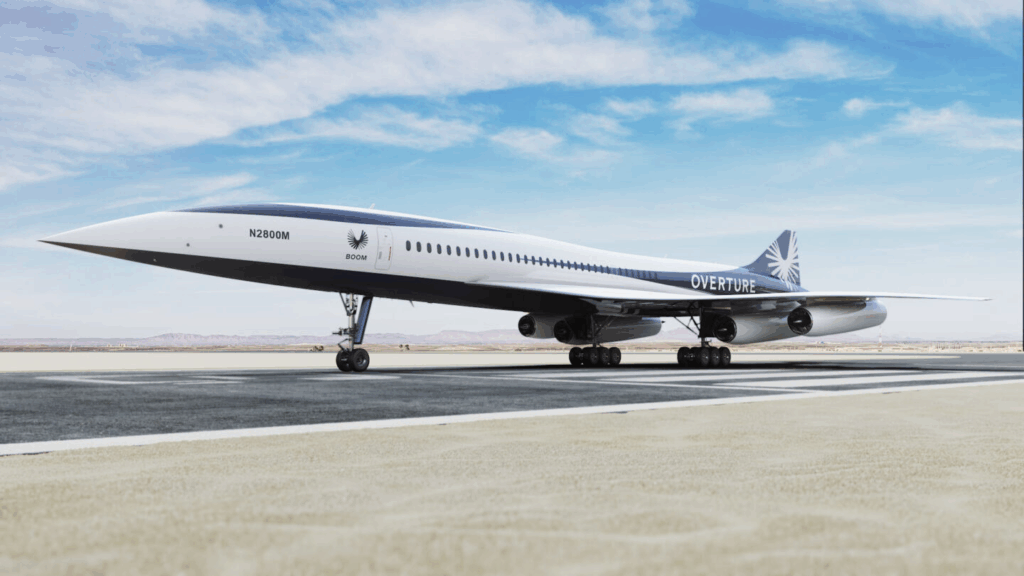
- Boom Supersonic and the Overture: Although primarily targeting the commercial market, Boom Supersonic’s Overture project has captured immense attention. Designed to carry 65–88 passengers at speeds of Mach 1.7, the Overture has secured pre-orders from major airlines. The company is also collaborating with Northrop Grumman on military variants, showcasing the technology’s broader potential. Boom expects regulatory approval by 2029.
- Spike Aerospace and the S-512: Spike Aerospace’s S-512 is an SSBJ project focused on the private aviation market. With a goal of seating up to 18 passengers and cruising at Mach 1.6, the S-512 aims to address the challenge of sonic boom regulations with a “quiet boom” design.
- The NASA X-59 Project: NASA’s experimental X-59 aircraft, developed in collaboration with Lockheed Martin, is designed to prove that quieter, “low-boom” supersonic flight is possible. Its success could be instrumental in shaping future overland flight regulations, potentially opening up new markets for SSBJs.
Addressing the Challenges of Supersonic Flight
The path to commercial viability is not without hurdles. Developers are focused on overcoming the significant challenges that plagued the Concorde.
- Sonic Boom Regulations: Existing rules prohibit civilian supersonic flight over land in many countries. In June of 2025, President Trump signed an Executive Order allowing supersonic flight over land as long as there is no audible sonic boom at ground level.
- Environmental Concerns: Modern supersonic jets, like Boom’s Overture, are being designed to run on 100% Sustainable Aviation Fuel (SAF), mitigating environmental impact and appealing to a growing base of eco-conscious corporations.
- Operational Costs: While SSBJs will be more expensive to operate than their subsonic counterparts, manufacturers are focused on efficiency gains. Projections estimate first-generation SSBJs will have hourly costs two to two-and-a-half times higher than flagship subsonic ultra-long-range jets, but developers hope to break the “economic barrier” that doomed the Concorde.
Holstein Aviation’s team of IADA certified professionals bring decades of transaction experience, real-time market intelligence and global reach. We guide our clients through every step of the process, ensuring confidence and clarity in today’s dynamic environment. The Holstein Aviation team is closely watching the trends to include the emerging supersonic business jet market. If you’re preparing to sell your aircraft, or buy a subsonic or supersonic aircraft, Holstein Aviation is your trusted partner in business aviation.