Alabama’s business aviation market is one of the most Citation-heavy you’ll find. Based on the current in-state fleet, 345 turboprops and business jets call Alabama home. The numbers describe a market anchored by Birmingham, with strong secondary hubs in Tuscaloosa, Huntsville and Mobile, and an unusually deep base of Citations and King Airs.
Here’s the Alabama business aviation market by the numbers, the latest in a series breaking down what’s actually flying in each state.

A MID-VINTAGE, OWNER-HEAVY FLEET
The average manufacture year for all 345 in-operation aircraft is 2003, with a median of 2005. About 24 percent of the fleet (84 aircraft) was built in 2015 or later, and 41 aircraft (12 percent) date to 2020 or newer. At the other end, 55 aircraft (16 percent) were built before 1990. The fleet runs from 1972 airframes to 2026 deliveries.
Ownership is weighted heavily toward direct ownership:
- Wholly owned: 328 aircraft (95.1 percent)
- Shared ownership: 17 aircraft (4.9 percent)
That owner-heavy split fits a state where most aircraft serve the companies and individuals who bought them.
WHERE THE FLEET LIVES
Alabama’s business aircraft are based at 45 different airports, but the market clusters around a handful of fields. Of the 331 aircraft with a recorded base airport, the leading fields are:
- Birmingham-Shuttlesworth International Airport: 97 aircraft
- Tuscaloosa Municipal Airport: 23 aircraft
- Huntsville International Airport: 18 aircraft
- Mobile Regional Airport: 17 aircraft
- Albertville Regional Airport: 14 aircraft
- Dothan Regional Airport: 14 aircraft
- Auburn University Regional Airport: 13 aircraft
- Bessemer Airport: 13 aircraft
- Mobile Downtown Airport: 12 aircraft
- Dannelly Field / Montgomery Regional: 10 aircraft
- Madison County Executive Airport: 10 aircraft
Birmingham-Shuttlesworth alone holds about 29 percent of the aircraft with a recorded base, and the top two airports, Birmingham and Tuscaloosa, account for more than a third. Add Bessemer, just outside the city, and the Birmingham area holds 110 aircraft, or 33 percent of the total. Mobile Regional and Mobile Downtown together hold 29. The top ten fields hold roughly 70 percent of the aircraft with a recorded base.
WHAT ALABAMA FLIES
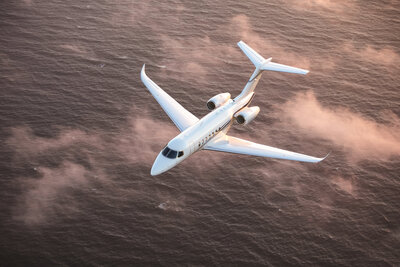
Citation is the clear leader by manufacturer, with 126 aircraft statewide, more than double the next closest maker. King Air (62), Pilatus (18), Challenger (15) and Gulfstream (14) round out the top five, with Caravan (13), Cirrus (12), Hawker (12) and Learjet (11) close behind.
By specific model, the list shows a market that favors light and midsize Citations alongside proven King Air and single-engine turboprops:
- Citation 525: 12
- Citation Bravo: 12
- Caravan 208B: 11
- Citation XLS+: 10
- King Air 350: 9
- Citation CJ4: 9
- Pilatus PC-12 NG: 9
- Citation II: 7
- Citation CJ2: 7
- King Air B200: 7
- Cirrus Vision SF50: 7
No single model runs away with the market, but the Citation family does. Citations account for about 37 percent of the entire fleet, and King Airs add another 18 percent. In all, 122 distinct models appear across the fleet, so the market is deep in Citations and King Airs alongside Pilatus PC-12s, Caravans, Challengers, Hawkers and Gulfstreams.
WHAT’S ON THE MARKET RIGHT NOW
Of the 345 aircraft based in Alabama, 26 are currently listed for sale, about 8 percent of the fleet. Seventeen carry a published asking price, eight are listed as “inquire,” and one is a share offering.
The for-sale list is led by Citations, with 10 listings, followed by seven King Airs, two Challengers and two Pipers. A few models stand out:
- King Air F90: 3 for sale
- Citation Bravo: 2 for sale
- Citation VII: 2 for sale
Published asking prices run from $399k for a 1979 Citation II to $3,695k for a 2002 Citation CJ2. Birmingham-Shuttlesworth has the most listings of any field (6), followed by Bessemer (4), with Auburn University Regional, Cullman Regional and Mobile Downtown each at two.
THE OPERATORS BEHIND THE FLEET
A mix of charter and management operators, medical flight programs, corporate flight departments and independent owners account for the aircraft flying in Alabama:
- Revolution Flight, LLC: 12 aircraft
- AirMed International, LLC: 6 aircraft
- Gov’t of USA – Army: 6 aircraft
- International Jet Charter, Inc.: 5 aircraft
- Corporate Air Management: 4 aircraft
- Jet Services, Inc.: 4 aircraft
Several Alabama corporations also run their own aircraft, including Regions Bank, Drummond Company, Harbert Aviation and Peco Foods, with three aircraft apiece. About 284 distinct operators appear across the fleet, which points to a market of owner-operators, family and holding companies, and a handful of larger flight departments on top. By usage, 311 aircraft (90 percent) fly business missions. The rest fly government, medical, charter, military and personal roles, plus one dealer-inventory aircraft.
FLEET ACTIVITY
The average airframe in Alabama’s fleet with recorded flight-hour data has logged about 4,960 total hours, with a median of about 3,960. Combined with a fleet whose center of gravity sits in the mid-2000s, that points to a hardworking but relatively young fleet with plenty of useful life left.
THE BOTTOM LINE
Alabama’s business aviation market is concentrated, corporate and Citation-driven, from the state’s many light and midsize Citations to its King Airs, Pilatus and Caravan turboprops and Challengers. Birmingham anchors the market, but with 45 base airports and about 284 operators, this isn’t a market defined by one hub. Huntsville, Mobile, Tuscaloosa and the smaller regional fields all carry real weight. For owners and buyers trying to understand where they fit, or brokers trying to figure out where the next deal is likely to come from, the fleet data tells a clear story: Alabama is a corporate-driven, Citation-and-King-Air market with room for nearly every segment of business aviation.
Contact Holstein Aviation to talk through where your aircraft fits into the Alabama market, whether you’re buying, selling, or reevaluating how it’s managed. With a jet brokerage team that understands the market, you can make your next move with confidence.